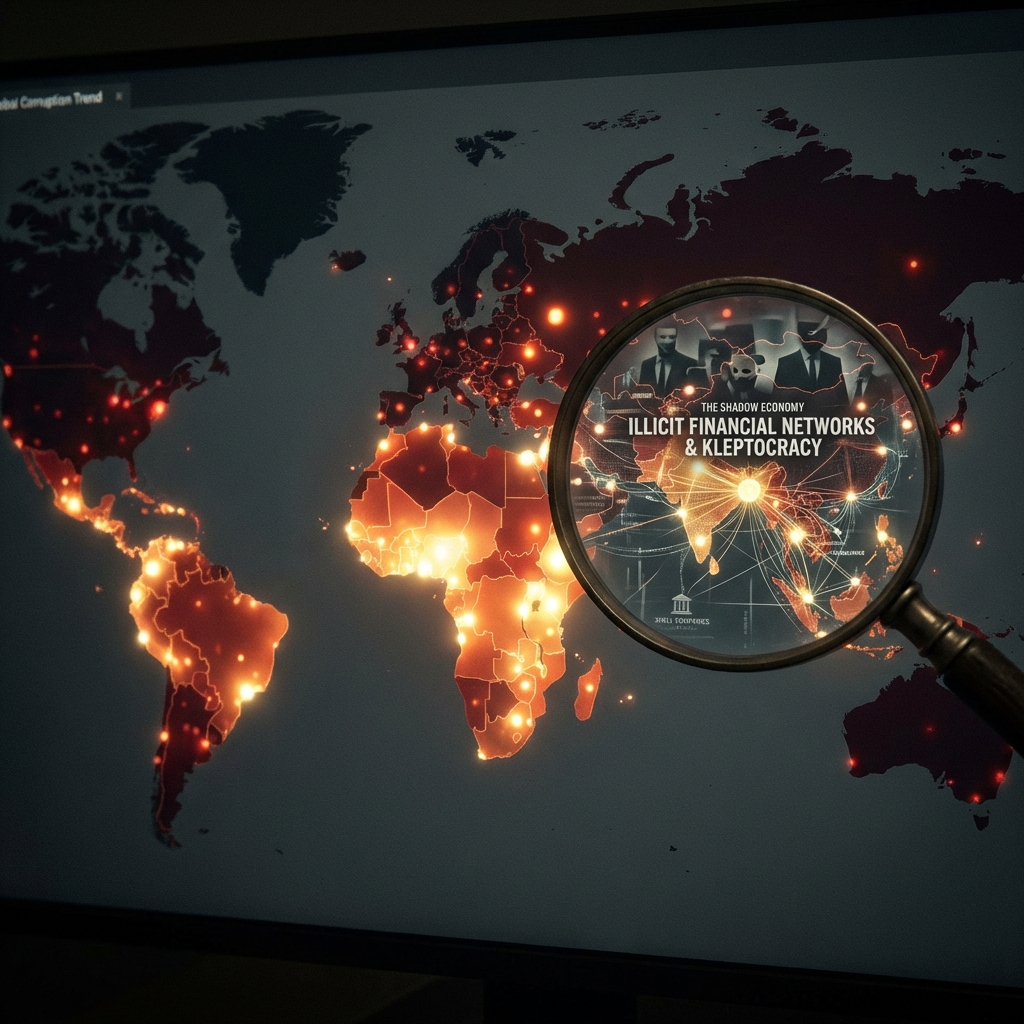
📊 The Corruption Audit: 20-Year Insights
- Global Average: The global CPI average has remained stuck at 43/100 for over a decade.
- Stagnant Progress: More than two-thirds of countries score below 50, indicating serious corruption issues.
- The G7 Divide: Even established democracies have seen scores drop by an average of 3-5 points in the last 5 years.
- Digital Impact: Countries with high e-governance adoption rates show a 15% lower incidence of public sector bribery.
If you’ve ever felt like the news is just a recurring cycle of the same scandals with different names, the data suggests you’re right. In the public sphere, corruption is often discussed as a moral failing or a dramatic plot point for a political thriller. But for analysts, it is something much more clinical: it is a tax on human potential.
Why should this matter to a person who just wants to get through their day? Because corruption is the silent architect of the world around you. It determines whether the bridge you drive across is safe, whether your medical records are private, and whether your taxes are building schools or fueling ghost projects. As we look back at 20 years of data, the story isn't just about who got caught—it's about how the system itself has evolved.
1. The Stagnation Paradox: Why Progress Flatlined
Since 2012, the global average score on the Corruption Perceptions Index (CPI) has remained stubbornly fixed at 43 out of 100. To put this in perspective, think of it as a class average that has stayed at a "D+" for twelve years straight. Despite the rise of the internet, the increase in global watchdog groups, and the "transparency wave" of the early 2010s, the needle has barely moved.
This stagnation suggests a "ceiling" that traditional anti-corruption measures have hit. Most countries that were struggling in 2006 are still struggling in 2026. The data indicates that while we are getting better at identifying corruption, we aren't necessarily getting better at dismantling the structures that allow it to thrive.
2. Winners, Losers, and the "Democratic Backsliders"
The numbers over the last two decades reveal a surprising shift. While many expect corruption to be a problem exclusive to "developing" nations, the most concerning trend in the 2020s has been the decline of scores in established Western democracies.
- The Risers: Countries like **Cote d’Ivoire**, **Senegal**, and **Greece** have shown significant improvements over the last decade, proving that sustained institutional reform can yield measurable results.
- The Backsliders: Several G7 nations have seen their scores dip. Analysts attribute this to the weakening of independent judiciaries and the rise of "opaque" political financing.
The takeaway? Integrity isn't a destination you reach; it's a state you have to maintain. The moment a system stops prioritizing transparency, the decay begins—regardless of how historically "clean" that country was.
3. The Productivity Tax: What It Costs You
Corruption is the ultimate "hidden tax." For every point a country drops on the integrity scale, there is a measurable decrease in foreign direct investment and a rise in the cost of basic public services. In 2026, economists estimate that corruption drains roughly 5% of global GDP annually.
For a younger person entering the workforce, this isn't just an abstract economic fact. It translates into a more competitive and less fair job market. When contracts are awarded based on "connections" rather than merit, the most talented people lose out. The data shows a direct correlation between high corruption levels and "brain drain"—talented youth leaving their home countries for more transparent systems abroad.
4. The 2026 Shift: Can Technology Save Us?
Is there a light at the end of the 20-year tunnel? The 2026 data points to a major shift in e-governance. Countries that have digitized at least 80% of their public procurement processes have seen an average 15% reduction in reported bribery cases. When the "human element" is removed from the initial transaction, the opportunity for a handshake deal vanishes.
However, technology is a double-edged sword. While blockchain and AI are making it easier to track public funds, they are also being used to create more sophisticated "dark pools" for illicit money. The battle hasn't vanished; it has just moved to a different layer of the stack.
Looking Ahead: From Cynicism to Systems
The most dangerous result of 20 years of stagnant corruption data isn't the corruption itself—it's the cynicism it produces. When we see the same numbers year after year, it’s easy to believe that nothing can change. But the data also shows that countries can and do improve when they shift from chasing "corrupt individuals" to building "transparent systems."
The next 20 years will likely be defined by this tension between digital transparency and high-tech opacity. As a reader and a citizen, the first step is to stop viewing corruption as an inevitable part of politics and start viewing it for what the data says it truly is: a manageable, systemic inefficiency that we can no longer afford to ignore.
Frequently Asked Questions
What is the global average corruption score?
The global average on the Corruption Perceptions Index (CPI) is currently 43 out of 100, a number that has remained virtually unchanged for over a decade.
Which countries have improved the most?
Over the last 10 years, countries like Greece, Cote d'Ivoire, and Seychelles have shown significant statistical improvements in their integrity scores.
Does technology reduce corruption?
Data shows that high levels of e-governance and digital procurement can reduce public sector bribery by up to 15%, though new forms of digital corruption are emerging.