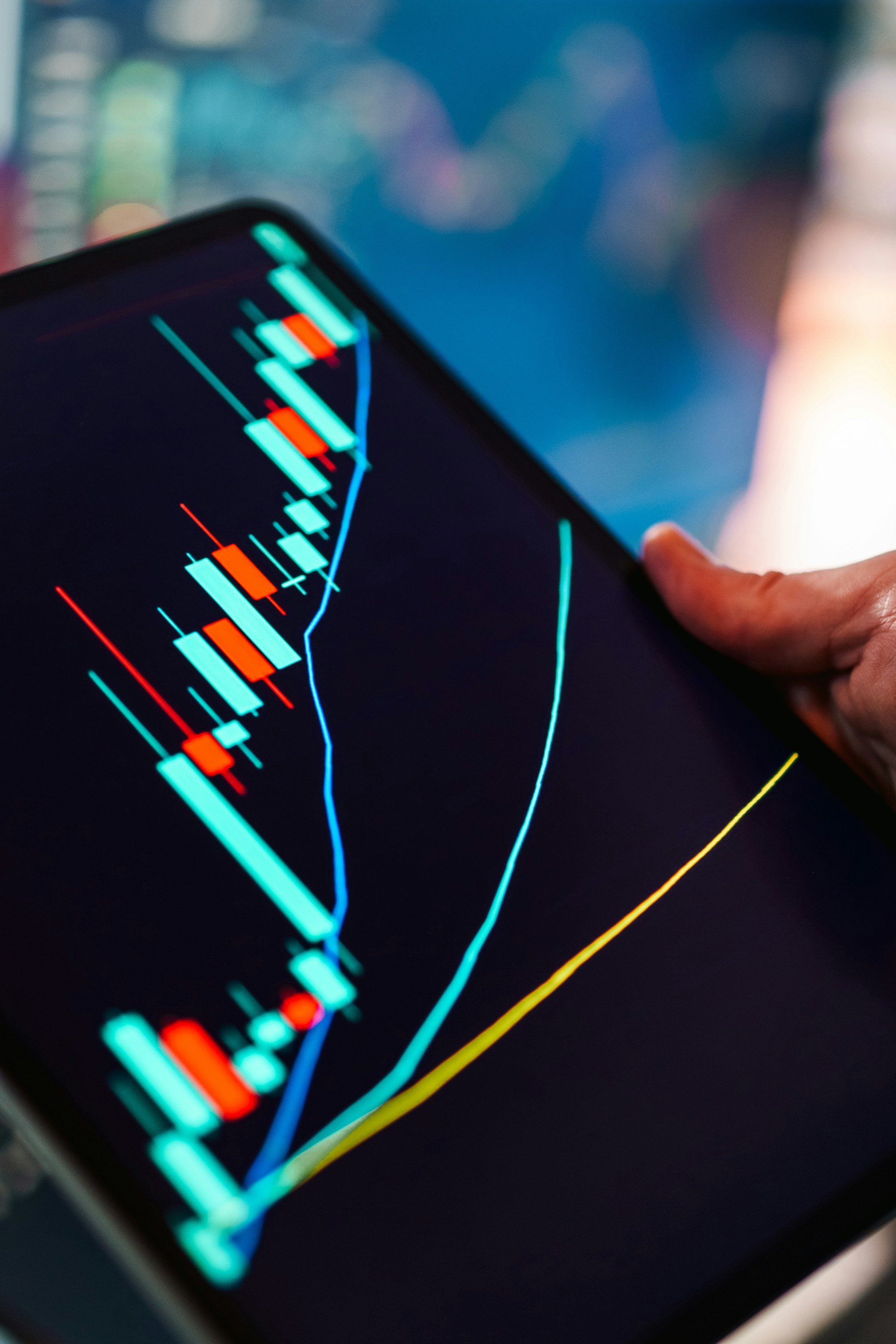
📈 The Market Snapshot (2026)
- The Signal: The yield curve remains "inverted" (short-term rates are higher than long-term rates).
- The History: This specific signal has preceded every single recession since 1955.
- The Reality: It's not a guarantee of doom, but it is a guarantee of stress. The market expects growth to slow down significantly.
- The Move: Smart money is moving out of speculative assets and locking in guaranteed yields while they last.
If you only follow financial news on social media, you probably think the economy is all about NVIDIA stock prices and cryptocurrency rallies. But while those assets make for exciting headlines, they don’t tell you much about the actual health of the global economy.
To understand where we are really heading, you have to look at the "boring" stuff: Bonds.
The bond market is often called the "smart money" because it’s dominated by governments, pension funds, and massive institutional players who aren't interested in gambling. They are interested in certainty. And right now, their behavior is flashing a signal that we cannot afford to ignore.
The Yield Curve: The Economy’s EKG
Let’s strip away the jargon. When you buy a government bond (a Treasury), you are essentially loaning money to the government. In return, they pay you interest. Simple.
Normally, this works like a standard loan:
• If you loan money for 2 years, you get a lower interest rate.
• If you loan money for 10 years, you get a higher interest rate because you are locking your money away for longer.
This creates a normal, upward-sloping "yield curve." It means investors feel optimistic and expect the economy to grow normally.
But right now, the opposite is happening. You can get paid more to lend money for 2 years than for 10 years. This is called an Inverted Yield Curve.
A "Glitch in the Matrix"
Why would anyone accept less money for a longer commitment? It seems to defy logic. But investors only do this when they are scared.
When the big players rush to buy 10-year bonds even at low rates, they are effectively saying: "I don't care about making a huge profit. I just want to lock in a safe return because I think things are going to get much worse in the future."
They are betting that interest rates will crash in the next few years to save a struggling economy. Essentially, they are pricing in a recession before it even happens.
The 2026 Context: Why It’s Different This Time
We are currently sitting in one of the longest yield curve inversions in history. The curve first flipped back in 2022, and we are still staring at it in 2026. Critics—and optimistic politicians—will tell you that "this time is different." They argue that the post-pandemic economy broke the old models.
And to be fair, they have a point. The labor market has remained shockingly resilient. People are still spending. But the bond market hasn't budged.
What we are seeing now is a tug-of-war between current data (which looks okay) and future expectations (which look gloomy). The bond market isn't reacting to what is happening today; it's reacting to the massive wall of corporate debt that needs to be refinanced at higher rates in late 2026 and 2027.
What This Means for Your Wallet
You don't need to be a Wall Street trader to use this information. If the smartest investors in the room are getting defensive, it might be time for you to audit your own risks.
1. Cash is (Currently) King
With short-term rates still elevated, keeping money in high-yield savings or short-term treasury bills is a legitimate strategy. You are getting paid handsomely to wait.
2. Job Security Matters
Recessions don't just mean stock portfolios go down; they mean hiring freezes. The bond market signal suggests that the "easy" job market might be tightening up soon.
3. Don’t Panic Sell
Just because a signal is flashing doesn't mean the world is ending. The market has predicted "10 of the last 5 recessions." It tends to be overly pessimistic. Use this data to balance your portfolio, not to liquidate it.
The Bottom Line
The bond market is telling us that the "free money" era is truly over. We are returning to a normal economic cycle where growth is harder to come by and money actually has a cost.
Don’t fear the yield curve. Respect it. It’s the check engine light on the dashboard of the global economy. You don't have to pull over immediately, but you definitely shouldn't ignore it.
Frequently Asked Questions
What is a "yield" in simple terms?
Yield is simply the annual return you get on a bond. If you buy a $100 bond for $95, the difference is your profit. The "yield" is that profit expressed as a percentage of the price.
Does an inverted curve mean a crash is immediate?
No. Historically, the stock market can actually peak after the curve inverts. The recession usually hits 12 to 18 months later, often right as the curve starts to un-invert.
Are bonds safer than stocks?
Generally, yes. Government bonds are considered "risk-free" in terms of getting your money back, though their value can fluctuate before maturity. Stocks represent ownership in a company and carry the risk of that company failing.